A Powder Coating Oven is far more than a simple heating chamber; it is the critical piece of equipment that determines the final quality, durability, and appearance of a powder-coated finish. This essential thermal processing system is designed to melt and chemically crosslink the electrostatically applied powder into a smooth, continuous, and resilient film. The global market for these ovens is steadily growing, driven by stringent environmental regulations favoring solvent-free powder coatings and the continuous expansion into new industries such as automotive, aerospace, and furniture. Selecting the right Powder Coating Oven—whether a compact batch oven for a job shop or a continuous conveyorized system for high-volume production—requires a deep understanding of thermal technology, process requirements, and energy efficiency. The performance of your entire coating line hinges on the oven's ability to deliver precise, consistent, and reliable curing, making it a cornerstone investment for any finishing operation.
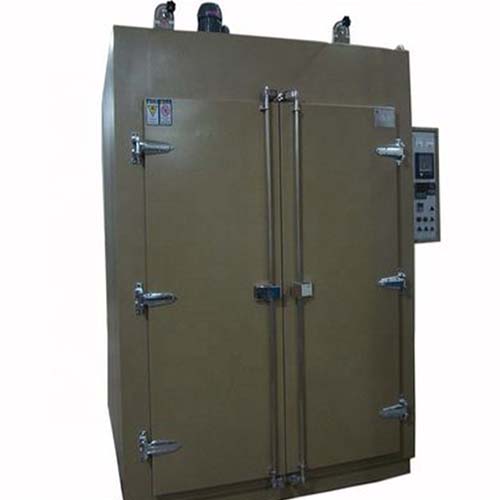
Powder Coating Oven Technology and Working Principle
The core function of a Powder Coating Oven is to subject the coated part to a specific time-temperature profile, initiating a transformation from loose powder to a solid coating. This process, called curing or crosslinking, typically occurs within a temperature range of 300°F to 450°F (150°C to 230°C). Modern ovens achieve this through three primary heating methods, each with distinct advantages. Convection ovens circulate hot air uniformly around the parts, making them versatile and excellent for complex, three-dimensional shapes. Infrared (IR) Powder Coating Ovens use electromagnetic radiation to transfer heat directly to the part and coating surface, offering extremely fast heat-up times and energy efficiency, particularly for flat or simple-shaped substrates. Hybrid ovenscombine IR and convection technologies to leverage the speed of IR with the uniformity of convection, ideal for sensitive substrates or complex parts. The oven must maintain precise temperature uniformity (often within ±5°C) throughout the workload to ensure every part cures identically, preventing defects like under-curing (poor adhesion) or over-curing (brittleness and discoloration).
Powder Coating Oven Design and Performance Specifications
The design of a Powder Coating Oven is tailored to production needs, primarily categorized into batch and conveyorized systems. Batch ovens are ideal for low-volume, high-mix production or large, bulky items. They operate like an industrial oven, where a loaded rack is placed inside, the door is sealed, and a timed cure cycle begins. Conveyorized (or tunnel) ovens are integrated into a continuous finishing line, where parts on a conveyor move through pre-heat, cure, and cooling zones at a controlled speed. Key performance specifications beyond temperature range include heat source (electric, natural gas, oil), insulation quality, air flow design (horizontal/vertical), and recovery rate. Advanced control systems are paramount, featuring programmable logic controllers (PLCs) and touch-screen interfaces to store and execute precise recipes for different products, ensuring repeatability and traceability. For operations coating heat-sensitive materials like medium-density fibreboard (MDF), precise control and hybrid technologies are essential to cure the coating without damaging the substrate.
Powder Coating Oven Selection Criteria and Industry Application
Choosing the correct Powder Coating Oven involves a systematic analysis of several factors. The first consideration is product profile: the size, geometry, material (metal, MDF), and thermal mass of the parts dictate the heating method and oven chamber size. Production throughput (parts per hour) determines whether a batch or continuous system is required. Available utilities (electrical capacity, natural gas access) influence the choice of heating energy. Available floor space is also a critical practical constraint. Different industries have specialized requirements. The automotive and aerospace sectors demand ovens with exceptional uniformity and reliability for critical components. Appliance manufacturers require high-throughput systems that produce a durable, aesthetic finish. For architectural and furniture applications coating MDF, ovens must employ gentler, carefully controlled curing cycles, often utilizing IR or UV-curable powders to prevent substrate damage. An emerging trend is the use of hybrid IR/convection curing for multi-layer coatings, where a brief IR stage sets the decorative layer before a full convection cure, saving time and energy.
Powder Coating Oven Operation and Future Trends
Proper operation and maintenance of a Powder Coating Oven are vital for safety, efficiency, and coating quality. Key best practices include regular calibration of temperature sensors, cleaning of air filters and burner assemblies, and verification of airflow patterns. Monitoring energy consumption can identify insulation issues or burner inefficiencies. Looking forward, the Powder Coating Oven industry is evolving rapidly. The dominant trends are energy efficiency and smart manufacturing. New designs focus on improved heat recovery, high-efficiency burners, and better insulation to reduce operating costs. IoT (Internet of Things) connectivity allows for remote monitoring, predictive maintenance, and data analytics integration, paving the way for Industry 4.0 in finishing shops. Furthermore, as powder coatings expand into new substrates and applications, oven technology continues to adapt, with developments in low-temperature cure and advanced UV/infrared hybrid systems leading the way.
Statement: Hangzhou Huaxiang Coating Equipment Co., Ltd Chinese Powder Coating Equipment facturers provide you with customized equipment for various types of Powder Coating Lines, Powder Coating Ovens, Powder Coating Booths,Powder Coating Guns, etc. For inquiries! Contact us at
Email: gezx@cncolourspray.com
WhatsApp: +86 13335812068