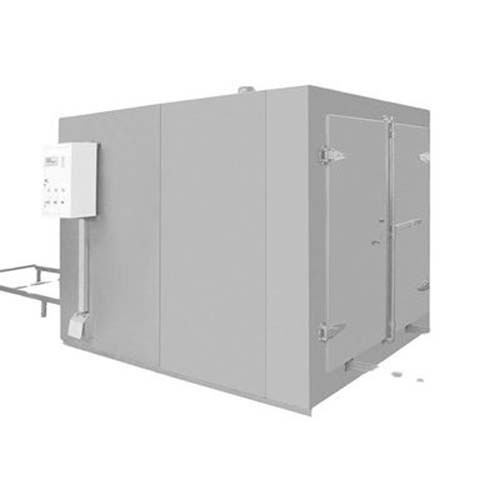
Within industrial finishing operations, selecting the appropriate curing technology is a critical decision balancing efficiency, cost, and capability. For facilities prioritizing rapid heat-up, high thermal output, and operational independence from electrical infrastructure, Propane Powder Coat Ovens present a powerful and practical solution. Unlike electric convection ovens, propane ovens utilize the combustion of propane gas to generate intense heat, offering distinct advantages for curing powder coatings on metal substrates. This technology is particularly relevant for high-throughput environments, shops with access to affordable propane, or applications involving dense, heavy parts that require substantial thermal energy. Understanding the working principles, system configurations, and essential safety protocols of Propane Powder Coat Ovens is fundamental for manufacturers aiming to optimize their finishing line for durability, speed, and cost-effectiveness.
Propane Powder Coat Oven Core Technology and Combustion Heating Principle
The fundamental operation of a Propane Powder Coat Oven centers on converting chemical energy from propane gas into controlled radiant or convective heat. In a typical direct-fired system, propane is mixed with air in a burner assembly and ignited. The resulting high-temperature combustion gases and flames are the primary heat source. These systems often employ a burner tube or ribbon burner design, where the burner is strategically mounted to direct heat into the oven chamber. The heat transfer within the oven can be predominantly radiant, where infrared energy emitted from hot surfaces (like burner tubes or ceramic tiles) directly heats the parts and powder, or convective, where heated air is circulated by high-volume fans for uniform temperature distribution. A key component is the combustion blower, which ensures a consistent supply of air for clean, efficient burning and is crucial for safety. The core advantage of this method is its ability to deliver a high BTU (British Thermal Unit) output, enabling fast oven heat recovery and the ability to cure large thermal mass loads efficiently, a challenge for some electric systems.
Propane Powder Coat Oven System Design and Technical Configuration
Propane Powder Coat Ovens are engineered as complete systems, typically in batch (walk-in) or conveyorized (tunnel) configurations. The primary design goal is to contain and efficiently utilize the combustion heat while ensuring part quality and operator safety. Central to the design is the burner management system (BMS), an electronic control panel that oversees the safe ignition sequence, flame monitoring, and temperature regulation. If a flame outage is detected, the BMS immediately shuts off the gas supply. Temperature is controlled by modulating the gas valve in response to signals from thermocouples placed within the curing zone. For optimal efficiency and finish quality, these ovens must be constructed with robust high-temperature insulation in walls, ceilings, and doors to minimize heat loss. An induced draft exhaust system is non-negotiable; it actively removes combustion byproducts (including water vapor and carbon dioxide) and any volatile organic compounds (VOCs) released from the curing powder, maintaining a safe atmosphere and preventing contamination of the coating.
Propane Powder Coat Oven Safety and Environmental Operation Protocols
Operating a Propane Powder Coat Oven demands rigorous adherence to safety and environmental standards due to the inherent risks of combustible gas and high-temperature processes. Comprehensive safety systems are integral and include flame supervision devices (FSDs), high-temperature limit switches, and gas pressure regulators. Proper ventilation is paramount; the exhaust system must maintain a negative pressure inside the oven to prevent fugitive emissions and ensure complete combustion product removal, aligning with industrial health standards. From an environmental perspective, while propane combustion produces CO₂, it is generally a cleaner-burning fuel compared to other fossil options. Modern Propane Powder Coat Ovens can be designed for high efficiency, reducing fuel consumption per part. Importantly, the powder coating process itself is environmentally favorable, as it contains no solvents and produces negligible VOC emissions compared to liquid paint, with overspray often being 99% recoverable for reuse. Compliance with national and local codes, such as NFPA 86 (Standard for Ovens and Furnaces), is mandatory for installation and operation.
Propane Powder Coat Oven Selection and Application Analysis
Choosing a Propane Powder Coat Oven requires a careful analysis of production needs and facility constraints. Key selection factors include production volume and part profile (size, material, thermal mass), available utilities (consistent propane supply versus electrical capacity), and operating cost analysis comparing local propane and electricity rates. Propane ovens are often the preferred choice for high-volume manufacturing, curing heavy steel fabrications (like agricultural or construction equipment), and in locations with unreliable or expensive grid power. They excel in applications where rapid heat-up and high-temperature curing (sometimes above 450°F / 232°C) are required. The technology is widely used in industries such as automotive (wheels, frames), agricultural machinery, structural steel, and outdoor furniture. For shops with a mixed workload, the robust performance of a propane system ensures curing capacity is never a bottleneck, even for the most demanding jobs.
Propane Powder Coat Oven Future Trends and Conclusion
The future of Propane Powder Coat Oven technology is aligned with broader industrial trends toward greater efficiency, control, and integration. Advancements are focusing on ultra-high-efficiency burner designs that maximize heat transfer while minimizing fuel use and emissions. Advanced combustion control systems with sophisticated PLCs allow for precise profiling of temperature ramps, improving energy use and cure consistency. Integration into smart factory(Industry 4.0) environments is progressing, with features for remote monitoring, predictive maintenance based on burner runtime, and data logging for quality assurance. Furthermore, the exploration of renewable propane (derived from sustainable sources) presents a path to further reduce the carbon footprint of this thermal process. In conclusion, the Propane Powder Coat Ovenremains a vital and evolving technology in the industrial finishing landscape. By offering powerful, reliable, and cost-effective curing, it enables manufacturers to achieve durable, high-quality powder-coated finishes that meet market demands for performance and sustainability. For operations where thermal power, speed, and independence are critical, investing in a well-engineered and properly maintained propane curing system is a strategic decision that delivers long-term value.
Statement: Hangzhou Huaxiang Coating Equipment Co., Ltd Chinese Powder Coating Equipment facturers provide you with customized equipment for various types of Powder Coating Lines, Powder Coating Ovens, Powder Coating Booths,Powder Coating Guns, etc. For inquiries! Contact us at
Email: gezx@cncolourspray.com
WhatsApp: +86 13335812068