Powder Coating Small Oven Solutions for Professional Finishes in Limited Spaces
The demand for durable, high-quality, and environmentally friendly finishing solutions has moved beyond the factory floor, reaching automotive restorers, metal fabricators, artists, and dedicated hobbyists. Central to this capability is the Powder Coating Small Oven, a compact thermal curing system designed to bring industrial-grade results to workshops of any size. Unlike large conveyorized ovens, a Powder Coating Small Oven is defined by its efficient footprint, batch-processing versatility, and accessibility. Its core function remains critical: to apply precise, controlled heat—typically between 350°F to 400°F (175°C to 205°C)—to transform electrostatically applied powder into a smooth, chemically crosslinked, and resilient coating. For anyone looking to professionally finish motorcycle parts, custom wheels, furniture, tools, or prototypes, understanding and selecting the right Powder Coating Small Oven is the key to unlocking consistent, salon-quality results.
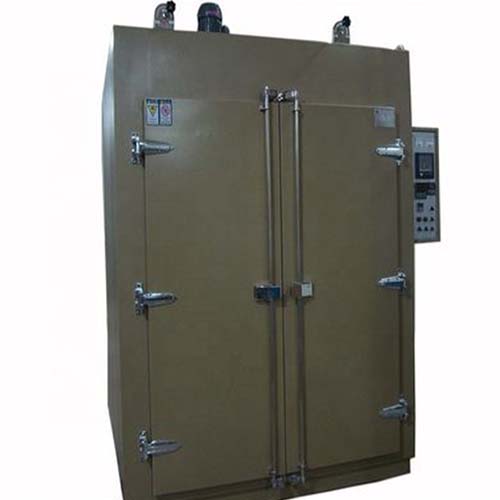
Powder Coating Small Oven Technology and Heating System Design
At its heart, a Powder Coating Small Oven is an engineered thermal chamber. Its effectiveness is determined by the heating technology employed, which directly influences cure quality, energy efficiency, and suitability for different part geometries. The predominant and most recommended technology for small-scale applications is Forced-Air Convection Heating.
In this system, electric heating elements warm the air inside the insulated chamber. A High-Temperature Recirculating Fan is the critical component that forces this hot air throughout the oven, creating uniform temperature distribution. This active air movement is essential for curing complex, three-dimensional items, as it eliminates cold spots and ensures heat penetrates into recesses and around edges. This makes a convection-based Compact Powder Coating Ovenincredibly versatile for a mixed workload.
An alternative technology is Infrared (IR) Heating, which uses radiant elements like quartz tubes to emit energy absorbed directly by the part surface. While IR can offer rapid heat-up times for simple, flat metal parts, its effectiveness in a Small Batch Powder Coating Oven is limited. IR requires a direct line of sight; complex parts will have shadowed areas that cure unevenly. Therefore, for the reliability needed in a general-purpose Workshop Powder Coating Oven, forced-air convection remains the superior and more forgiving choice, guaranteeing consistent results regardless of part shape.
Selecting the Right Powder Coating Small Oven A Technical Checklist
Choosing an effective Powder Coating Small Oven requires careful evaluation of several technical and practical factors. A methodical approach will prevent common pitfalls and ensure the oven meets your long-term needs.
Internal Dimensions and Capacity: This is the most crucial consideration. You must measure the largest item you intend to coat, including its hanging configuration, and then add a minimum of 6 to 12 inches of clearance on all sides. This space is not optional; it is vital for proper airflow and heat circulation. An undersized oven will lead to uneven curing and poor finish quality. Common configurations include Benchtop Powder Coating Ovens for very small parts and Cabinet-Style Powder Coating Ovens which offer greater vertical space for items like wheels or bicycle frames.
Thermal Performance and Power: The oven must have adequate heating power (wattage) to bring your typical parts—with their specific material and mass—up to cure temperature in a reasonable time. A small oven for light aluminum may function on a 120V circuit, but a Small Shop Powder Coating Oven for heavy steel parts will likely require a dedicated 240V power supply to deliver sufficient thermal energy. Adequate High-Temperature Insulation in the walls and door is equally important for heat retention and energy efficiency.
Control and Safety Systems: Precision is key. A modern oven should be equipped with a digital PID Temperature Controller. Unlike simple thermostats, a PID controller actively manages the heating elements to maintain a rock-steady temperature, preventing swings that can cause under- or over-curing. Safety features like an independent high-limit thermostat (to cut power if the primary control fails) and robust door seals are non-negotiable for safe operation.
Powder Coating Small Oven Operation and Process Optimization
Achieving perfect results with your Powder Coating Small Oven extends beyond the equipment itself to encompass a disciplined process.
Foundation: Surface Preparation: The importance of this step cannot be overstated. The substrate must be impeccably clean, degreased, and free of rust. For metals, a Conversion Coating (such as iron or zinc phosphate) is often applied prior to powder coating. This pretreatment dramatically improves coating adhesion and corrosion resistance, ensuring the durability of the finish. A failure in preparation will lead to coating failure, regardless of oven performance.
Loading and Curing Cycle: Load the oven thoughtfully. Ensure parts are properly grounded, securely hung, and spaced to allow unrestricted air flow. Never overload the chamber. Always adhere to the powder manufacturer's specified Cure Schedule for time and temperature. Using a separate oven thermometer to verify the internal temperature is a recommended best practice for quality assurance.
Cooling and Maintenance: After curing, allow parts to cool slowly inside the turned-off oven with the door slightly ajar to prevent thermal shock and dust contamination. Regular maintenance involves vacuuming out any powder residue from the oven interior and periodically checking the integrity of door seals and heating elements.
Conclusion: Integrating Your Powder Coating Small Oven into a Professional Workflow
A Powder Coating Small Oven is the cornerstone of a professional, small-scale finishing operation. By selecting a well-designed convection oven with the correct size, power, and controls, and by marrying it with rigorous surface preparation and process discipline, you can reliably produce finishes that exceed commercial standards.
The market for these ovens continues to grow, supported by advancements in powder chemistries, including Low-Temperature Cure Powters that expand the range of coatable substrates. Whether you invest in a pre-built Benchtop Powder Coating Oven for its convenience or undertake a customized DIY project, the goal remains the same: to create a capable, efficient, and safe thermal curing solution. By doing so, you transform your workshop into a hub for creating durable, vibrant, and professional-quality finished products.
Statement: Hangzhou Huaxiang Coating Equipment Co., Ltd Chinese Powder Coating Equipment facturers provide you with customized equipment for various types of Powder Coating Lines, Powder Coating Ovens, Powder Coating Booths,Powder Coating Guns, etc. For inquiries! Contact us at
Email: gezx@cncolourspray.com
WhatsApp: +86 13335812068