Oven Temperature For Powder Coating is the definitive process variable that governs the final quality, durability, and appearance of a powder-coated finish. It is the precise thermal energy required to trigger an irreversible chemical reaction, transforming loose powder particles into a continuous, crosslinked polymer film. In an industry moving towards greater efficiency and sustainability, mastering Oven Temperature For Powder Coating is what separates consistent, high-yield production from unpredictable results and costly rework. This technical guide explores the science, standards, and practical methodologies for achieving perfect thermal cure, from fundamental principles to advanced optimization strategies for both conventional and next-generation powder coatings.
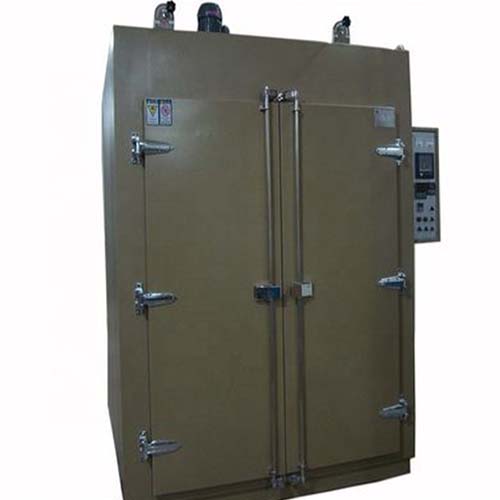
Oven Temperature For Powder Coating The Science of Substrate Temperature versus Air Temperature
The most critical principle in thermal curing is understanding that powder coatings cure based on the temperature of the substrate, not the temperature of the air inside the oven. An Oven Temperature For Powder Coating controller displays and regulates the ambient air temperature, but the powder film reacts to the heat conducted through the metal or substrate. This distinction is paramount because different materials have varying thermal masses and heat absorption rates. A dense, thick steel part acts as a significant heat sink and will take considerably longer to reach the target Metal Temperature For Curing than a thin aluminum part under identical oven settings. Failure to account for this leads to under-cured coatings on heavy parts or energy waste and potential over-cure on lighter parts. Therefore, the powder manufacturer's cure specification always refers to the final part metal temperature and the time it is maintained at that temperature.
Oven Temperature For Powder Coating Standard Ranges and Determining Factors
For most conventional thermoset powder coatings, the standard Oven Temperature For Powder Coating range is 350°F to 400°F (177°C to 204°C). A typical cure schedule might specify "15 minutes at 380°F (193°C) part metal temperature." This range is engineered to provide the optimal balance between energy input and the chemical crosslinking needed for properties like adhesion, impact resistance, and weather durability. Four primary factors interact to determine the correct Oven Temperature For Powder Coating profile for any given job:
Powder Resin Chemistry: The core determinant. Epoxy, polyester, polyurethane, and hybrid powders each have unique molecular structures requiring specific activation energy (temperature over time).
Substrate Material, Thickness, and Mass: As noted, the thermal characteristics of the part itself dictate how much energy is needed and for how long to achieve the target metal temperature.
Part Geometry and Racking Density: Complex parts with deep recesses challenge heat distribution. Loading density affects airflow; overcrowded ovens create cold spots where parts shield each other from convective heat.
Oven Technology and Efficiency: The heat source and air movement design directly impact how efficiently and uniformly thermal energy is transferred to the parts. Proper oven calibration is non-negotiable.
Oven Temperature For Powder Coating Advanced Applications and Low-Cure Technology
Beyond standard ranges, specialized applications demand precise Oven Temperature For Powder Coating control. For components exposed to extreme heat in service—such as engine parts, barbecue grills, or automotive exhaust systems—High Temperature Powder Coatings are formulated to withstand continuous exposure from 500°F to over 1000°F (260°C to 538°C). Curing these coatings often requires higher initial oven temperatures to ensure proper film formation before entering service.
The most significant innovation in recent years is Low Cure Powder Coating Oven technology. Next-generation powders are engineered with advanced catalysts that achieve full chemical crosslinking at significantly reduced temperatures, typically between 250°F to 300°F (121°C to 149°C). The benefits are transformative: energy consumption can be reduced by 40% to 60%, throughput can increase due to faster heat-up and cool-down cycles, and the range of coatable substrates expands dramatically to include heat-sensitive materials like engineered wood (MDF), certain plastics, and pre-assembled products with seals or gaskets. Successfully implementing low-cure powders requires an oven with excellent temperature uniformity and precise control to avoid under-curing at the lower end of the thermal window.
Oven Temperature For Powder Coating Process Control and Troubleshooting
Achieving consistent results requires a disciplined, data-driven approach. The essential workflow involves:
Consulting the Technical Data Sheet (TDS): Always begin with the powder manufacturer's published cure schedule.
Performing Oven Temperature Profiling: This is the gold standard for process validation. Using a profiling kit with thermocouples attached to representative parts, you map the exact Part Metal Temperature achieved throughout the cure cycle. This identifies cold spots, verifies dwell time, and ensures the entire load meets the specification.
Regular Equipment Calibration: Oven controllers and sensors must be calibrated against a NIST-traceable standard at regular intervals to ensure accuracy.
Common coating defects are frequently rooted in Oven Temperature For Powder Coatingissues:
Under-curing: Results in poor adhesion, a soft film, and reduced chemical resistance. Caused by the part not reaching the minimum required metal temperature or insufficient dwell time. Solutions include increasing oven setpoint, lengthening cycle time, improving oven airflow, or reducing load density.
Over-curing: Leads to discoloration (yellowing of clear coats, darkening of whites), excessive brittleness, and loss of impact resistance. Caused by exceeding the maximum temperature or time of the powder's curing window. Solutions involve reducing temperature or cycle time.
Orange Peel (Texture): While often related to application parameters, an oven temperature that is too high can cause the powder to gel too quickly before it can flow out smoothly, exacerbating texture.
Gloss Variation: Inconsistent temperature across a rack of parts causes differential crosslinking density, resulting in patches of higher or lower gloss on an otherwise identical coating.
Conclusion Mastering the Thermal Variable
Oven Temperature For Powder Coating is the linchpin of process control in industrial finishing. It transcends being a simple dial setting, representing instead a complex interplay between polymer science, heat transfer physics, and equipment engineering. By rigorously applying the principles of substrate temperature measurement, leveraging tools like thermal profiling, and staying informed on advancements like low-cure chemistries, finishers can transform their curing process from a potential source of variation into a pillar of predictable quality and efficiency. Whether operating a standard batch oven or a continuous line, the precise command of Oven Temperature For Powder Coating ensures every finished product meets its performance specifications for durability, aesthetics, and longevity.
Statement: Hangzhou Huaxiang Coating Equipment Co., Ltd Chinese Powder Coating Equipment facturers provide you with customized equipment for various types of Powder Coating Lines, Powder Coating Ovens, Powder Coating Booths,Powder Coating Guns, etc. For inquiries! Contact us at
Email: gezx@cncolourspray.com
WhatsApp: +86 13335812068