Oven For Powder Coating Wheels represents a critical and specialized segment within the industrial finishing landscape, dedicated to providing durable, high-performance, and aesthetically superior coatings for one of a vehicle’s most visible and functionally important components. Unlike general-purpose powder coating ovens, an Oven For Powder Coating Wheels is engineered to meet the unique demands of wheel substrates—primarily aluminum alloys and steel—delivering the extreme durability needed to withstand road debris, temperature cycles, brake dust, and chemical exposure. The market for wheel powder coating is expanding robustly, driven by strong demand in both automotive manufacturing and the thriving aftermarket customization and refurbishment sectors. For businesses ranging from high-volume OEM suppliers to specialized wheel repair shops, selecting and operating the right Powder Coating Oven For Wheels is fundamental to achieving a finish that combines long-term corrosion protection with flawless visual appeal, directly impacting product quality and customer satisfaction.
Powder Coating Oven For Wheels Core Technology and Performance Specifications
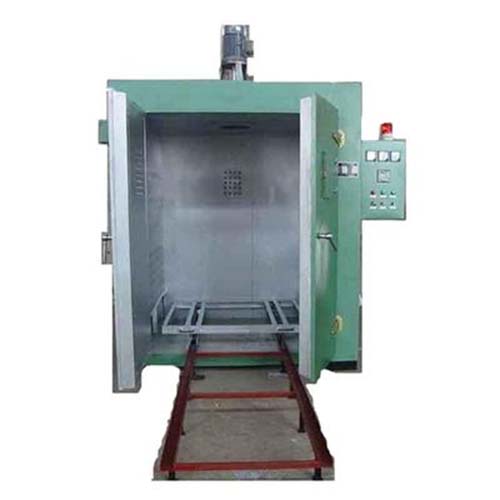
The primary function of a Wheel Powder Coating Oven is to precisely execute the curing process, transforming the applied powder into a chemically crosslinked, solid film. This requires reaching and maintaining a specific Metal Temperature For Curing as dictated by the powder formulation, typically in the range of 180°C to 200°C (356°F to 392°F). Achieving this uniformly on a wheel—a part with significant thermal mass, complex geometry with spokes, and deep barrels—demands advanced oven engineering. The dominant and most effective technology for this application is Forced-Air Convection Heating. In this system, electric heating elements or, in larger industrial setups, gas-fired systems generate heat, which is then vigorously circulated throughout the insulated chamber by high-velocity fans. This forced circulation is non-negotiable for a Wheel Curing Oven, as it ensures hot air penetrates the intricate spokes and reaches all interior barrel surfaces, eliminating cold spots that lead to under-curing. Key performance specifications for a professional-grade oven include exceptional Temperature Uniformity (often within ±5°C), rapid heat-up time to minimize cycle duration, and a robust control system. Modern Powder Coating Ovens For Alloy Wheels feature digital PID Controllers that allow operators to program and store precise cure recipes, ensuring repeatable results batch after batch.
Selecting a Powder Coating Oven For Wheels Key Decision Factors
Choosing the optimal Oven For Powder Coating Wheels requires a careful technical and operational analysis. The decision matrix centers on three primary factors: size, thermal capacity, and production workflow. Firstly, Internal Oven Dimensions are paramount. The oven must accommodate the largest wheel diameter and width you plan to process, with ample additional space (recommended minimum of 30 cm on all sides) to allow for unimpeded airflow around each wheel. For shops focusing on sedan or sports car wheels, a compact cabinet oven may suffice. For truck or commercial vehicle wheels, a larger walk-in batch oven is necessary. Secondly, Thermal Performance and Power must match the workload. Curing a single, thin aluminum wheel requires less energy than a batch of four heavy-duty steel wheels. The oven’s heating power (measured in kW) must be sufficient to bring the total thermal mass of a full load up to cure temperature efficiently. Electrical requirements follow suit; smaller benchtop units may use 220V, while high-capacity production ovens typically require a 380V industrial power supply. Thirdly, the choice between a Batch Oven and an integrated Conveyorized Oven depends on volume. Batch ovens offer maximum flexibility for custom colors and mixed wheel types, ideal for aftermarket shops. Conveyorized systems are the choice for OEMs or large refurbishment centers where throughput and consistent process timing are critical.
Oven For Powder Coating Wheels Operation and Process Excellence
The performance of a Powder Coating Oven For Wheels is ultimately realized through disciplined process control. The journey to a perfect finish begins long before the oven is switched on, with meticulous Wheel Surface Preparation. This involves complete stripping of old coatings, thorough cleaning and degreasing, and often a multi-stage chemical pretreatment (such as etching and chrome-free conversion coating) to ensure maximum powder adhesion and corrosion resistance. Loading the oven correctly is a science in itself. Wheels must be mounted on dedicated, properly grounded racks or spindles that hold them securely and expose all surfaces. They must be spaced to prevent shielding each other from the convective airflow. The Curing Cycle must be validated using the powder manufacturer’s technical data sheet as a baseline, but the final authority is the actual Wheel Metal Temperature. Using a Temperature Profiling Kit with thermocouples attached to a test wheel is an industry best practice to map the heat distribution and confirm all areas of the wheel, including the back of the spokes and the inner barrel, achieve the required temperature for the specified time. Post-cure, allowing wheels to cool slowly in a dust-free environment is crucial to prevent thermal shock and ensure the coating fully hardens.
Advanced Applications and Industry Trends for Wheel Curing Ovens
The technology surrounding Oven For Powder Coating Wheels is continuously evolving to meet higher standards and new challenges. A significant trend is the adoption of Low-Cure Temperature Powder Coatings. These advanced formulations are designed to crosslink fully at temperatures as low as 140°C to 160°C. For wheel refurbishment shops, this translates to substantial energy savings and, more importantly, a drastically reduced risk of affecting the heat treatment (temper) of aluminum wheels, preserving their structural integrity. Another key development is in coating materials themselves. The market sees differentiation in powder types, such as fine powders for exceptionally smooth finishes, and special-effect powders containing advanced metal flakes or clear coats for high-gloss wet-look finishes. From an industrial perspective, automation and data integration are becoming standard. Modern Alloy Wheel Curing Ovens can be equipped with IoT sensors for remote monitoring, predictive maintenance alerts, and full data logging to provide traceability for quality assurance, which is increasingly demanded by both automotive manufacturers and discerning aftermarket customers.
Conclusion The Strategic Role of the Specialized Wheel Oven
An Oven For Powder Coating Wheels is far more than a simple heating chamber; it is the cornerstone of a quality-driven finishing process for a high-value automotive component. Whether serving the precise needs of Automotive Manufacturing, the vibrant custom color demands of the Aftermarket and Tire Modification scene, or the restorative work of Wheel Repair and Refurbishment businesses, this specialized equipment enables the application of a finish that is as tough as it is beautiful. By investing in an oven with the correct size, superior convective airflow, and precise control—and by coupling it with rigorous process discipline—businesses can ensure every wheel that leaves their facility meets the highest standards of durability, safety, and visual excellence. In a market where appearance and performance are paramount, mastering the Powder Coating Oven For Wheels is a definitive competitive advantage.
Technical Comparison of Wheel Oven Heating Technologies
Statement: Hangzhou Huaxiang Coating Equipment Co., Ltd Chinese Powder Coating Equipment facturers provide you with customized equipment for various types of Powder Coating Lines, Powder Coating Ovens, Powder Coating Booths,Powder Coating Guns, etc. For inquiries! Contact us at
Email: gezx@cncolourspray.com
WhatsApp: +86 13335812068