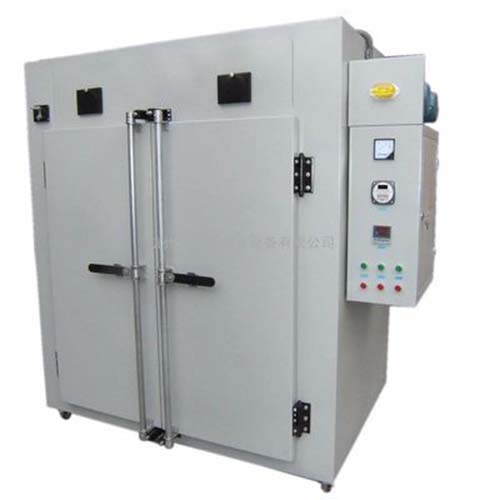
A Homemade Powder Coat Oven is the cornerstone of a successful DIY or small-scale powder coating setup, enabling you to transform applied powder into a durable, professional-quality finish. Unlike commercial systems that can cost thousands, building your own oven is a project that balances technical challenge with significant cost savings. The core function is to create a controlled, insulated environment that can consistently and safely bring parts to a Powder Coating Curing Temperature, typically in the range of 350°F to 400°F (177°C to 204°C), for a specified time. This guide walks you through the essential engineering considerations, material choices, and critical safety protocols to build a DIY Homemade Powder Coat Oven that delivers reliable, high-quality results.
Homemade Powder Coat Oven Core Technology and Heat Transfer Principles
The effectiveness of a Homemade Powder Coat Oven hinges on mastering basic heat transfer. The primary goal is to achieve uniform part temperature, not just hot air inside the chamber. This is most reliably accomplished through Forced-Air Convection Heating, which is the recommended method for DIY builds. In this system, heating elements (often repurposed) warm the air, and a high-temperature fan actively circulates it throughout the chamber. This forced circulation is crucial for battling “cold spots” and ensuring heat reaches all surfaces of complex, three-dimensional parts.
While Infrared (IR) heating is an alternative that directly heats parts via radiation, it is less ideal for a general-purpose Homemade Oven. IR effectiveness depends on a direct line of sight, meaning complex parts or dense oven loads can develop significant temperature variations due to shadowing effects, leading to uneven curing. Convection offers a more forgiving and consistent approach for the varied projects a hobbyist tackles.
Homemade Powder Coat Oven Key Design and Planning Considerations
Careful planning is paramount before sourcing any materials. Start by defining your Maximum Part Size. Measure your largest anticipated project and add a minimum of 6 to 12 inches of clearance on all sides to ensure adequate airflow. This determines your oven’s internal dimensions. The choice of Oven Shell is critical. A repurposed metal cabinet, old kitchen oven shell, or a custom-built box from steel sheets and angle iron are common choices. The structure must be rigid and capable of supporting interior insulation and components.
Insulation is non-negotiable for efficiency and safety. Lining all interior walls, the roof, and the door with high-temperature insulation such as mineral wool (rockwool) or rigid fiberglass board dramatically reduces heat loss, improves temperature uniformity, and keeps the exterior at a safer temperature. A well-sealed, insulated door with robust latches is essential to contain heat.
Homemade Powder Coat Oven Technical Construction Guide
This section outlines the key technical steps in assembling your oven.
Heating System Calculation and Installation: The heating elements must provide sufficient power (wattage). A common rule of thumb is 1,000 to 1,500 watts per 10 cubic feet of interior volume. Salvaged household oven elements are a popular and cost-effective choice. They must be securely mounted, typically on side or rear walls, away from direct contact with insulation or the outer shell. All wiring must be rated for high current and high temperature, and connections should be made in a proper electrical junction box. Consulting with or hiring a licensed electrician for this part of the project is a highly recommended safety investment.
Air Circulation System: A High-Temperature Recirculating Fan is what transforms a simple heated box into a functional curing oven. It ensures even heat distribution. The fan must be rated to operate continuously at temperatures above 400°F and be installed to create a circular airflow pattern within the chamber. A fan shroud or baffle can help direct airflow effectively.
Control and Safety Systems: Precise temperature control is vital for curing success. A digital PID (Proportional-Integral-Derivative) temperature controller is superior to a simple thermostat, as it maintains a stable setpoint without large swings. An independent high-limit safety thermostat should be wired in series as a critical backup to cut power if the primary controller fails, preventing dangerous overheating. Proper grounding of the entire oven structure and the part racking system is also essential for operational safety.
Homemade Powder Coat Oven Performance and Safety Optimization
Building the oven is only half the battle; optimizing its performance and adhering to strict safety is the other. Temperature uniformity should be verified using an Oven Thermometer or, ideally, a multi-channel data logger with probes placed at different locations within a test load. This "mapping" will identify any cold zones.
Safety cannot be overstated. Beyond electrical safety, you must address Ventilation and Fume Management. An exhaust port with a powered vent is necessary to remove volatile organic compounds (VOCs) released during the curing process. Furthermore, you must be aware of and design for Explosion Relief. Powder coating ovens are considered potential explosion hazards due to fine powder particles and fumes. Professional oven designs incorporate calculated relief areas or panels. For a Homemade Powder Coat Oven, this is an extreme risk that must be researched thoroughly based on local codes. Never leave the oven unattended during operation.
Homemade Powder Coat Oven Ask the Experts
Q: Is building a homemade oven really worth it compared to buying a cheap benchtop unit?
A: It depends on your priorities. A DIY Powder Coat Oven offers maximum customization for size and potentially lower cost if you source materials cheaply. However, it demands significant time, skill, and assumes all safety liability. A pre-built hobbyist oven provides tested safety, convenience, and warranty, but at a higher upfront cost and with fixed dimensions.
Q: My homemade convection oven seems to underperform, taking too long to cure parts. What should I check?
A: Oven underperformance often stems from inefficient airflow or an undersized heating system. First, verify your fan is operating correctly and that parts are loaded to allow air circulation. Second, check if your total wattage is sufficient for the oven volume and the thermal mass of your parts. Adding more insulation can also improve heat retention and efficiency.
Q: Can I use infrared heat lamps for a simple powder coat oven?
A: While IR lamps can melt powder, they are generally unsuitable for achieving a full, durable cure on most parts. The curing process requires the part's metal temperature to be held at a specific range for a sustained period (often 10-20 minutes) to complete the chemical crosslinking. IR lamps struggle to provide even, consistent heat for this duration, especially on parts with complex geometry, often resulting in a weak or tacky finish.
Q: What are the absolute critical safety steps I cannot skip?
A: 1) Professional-grade electrical installation for high-current heating elements. 2) Installation of a redundant high-limit safety thermostat. 3) Provision for adequate fume exhaust ventilation. 4) Thorough research and incorporation of explosion relief safeguards as per relevant fire codes. Ignoring any of these creates serious fire, explosion, or health risks.
Conclusion
Successfully building a Homemade Powder Coat Oven is an rewarding engineering project that unlocks the full potential of DIY powder coating. By prioritizing a forced-air convection design, meticulous attention to insulation and airflow, and—above all—a unwavering commitment to integrating robust safety systems, you can create a tool that delivers professional, durable finishes. Remember, the goal is not just to create heat, but to create a controlled, repeatable, and safe thermal environment for perfect curing every time.
Statement: Hangzhou Huaxiang Coating Equipment Co., Ltd Chinese Powder Coating Equipment facturers provide you with customized equipment for various types of Powder Coating Lines, Powder Coating Ovens, Powder Coating Booths,Powder Coating Guns, etc. For inquiries! Contact us at
Email: gezx@cncolourspray.com
WhatsApp: +86 13335812068