Small Powder Coating Machine Market Application and Price Overview
Small Powder Coating Machine systems meet a significant demand for durable, high-quality finishes among DIY enthusiasts, automotive restorers, artists, and small-scale manufacturers. This technology provides a professional alternative to liquid painting by applying a dry, electrostatically charged powder that is then cured under heat. The key advantages driving its adoption include superior coating durability, excellent material utilization with high transfer efficiency, and an environmentally friendly process with minimal volatile organic compounds. Entry-level systems are compact, often designed for standard 110V or 220V outlets, and are priced accessibly. Basic manual setups can be found within a range of a few hundred to over a thousand dollars, with price variations depending on included features like powder recovery systems, gun technology, and control precision. This makes professional-grade finishing a viable and cost-effective solution for small workshops and businesses.
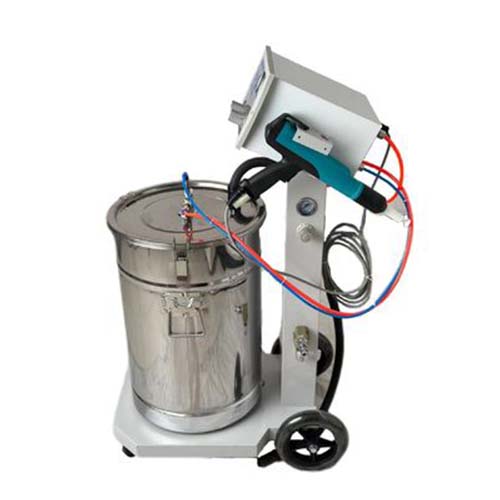
Small Powder Coating Machine Coating Project Introduction
A Small Powder Coating Machine project transforms metal objects with a tough, decorative, and protective layer. The core process involves three stages: preparation, application, and curing. First, the workpiece undergoes critical surface preparation, such as cleaning and degreasing, to ensure optimal powder adhesion. The Small Powder Coating Machine then applies the powder. In the electrostatic spraying method, the gun imparts a positive electric charge to the powder particles, which are then attracted to the grounded metal object, creating a uniform coat. Finally, the coated part is transferred to a curing oven. The heat causes the powder to melt, flow, and chemically cross-link into a smooth, solid film. This process is ideal for a vast array of items, from bicycle frames and automotive wheels to furniture, tools, and architectural metalwork, offering resilience against chipping, corrosion, and UV light.
Small Powder Coating Machine Surface Treatment Process Technical Characteristics
The technical prowess of a Small Powder Coating Machine lies in its electrostatic application and thermal curing. The electrostatic spray gun is the heart of the system, generating a high-voltage, low-current charge that is often adjustable to overcome application challenges. This ensures efficient powder transfer and wraparound coverage, even on complex edges. Modern systems feature precise control over key parameters: air pressure regulates powder flow and pattern, while voltage settings can be adjusted for optimal attraction. The curing stage is equally critical, where specific temperatures for a designated time trigger the powder's flow and cure, determining the final coating's mechanical strength and chemical resistance. This combination delivers a finish with excellent adhesion, impact resistance, and longevity, often outperforming liquid paints.
Small Powder Coating Machine Installation Tips
Proper installation of a Small Powder Coating Machine is straightforward but essential for safety and performance. Begin by setting up in a clean, dry, well-ventilated area. Ensure a stable power source matching the machine's voltage requirements and a clean, dry air supply with a regulator and filter. Connect the grounding cable from the machine to a dedicated ground point and attach the grounding clip directly to the workpiece or its rack; a secure electrical ground is non-negotiable for effective powder attraction and operator safety. Assemble the spray gun, feed hose, and powder hopper according to the manual. Before loading powder, perform a dry run with air only to check for leaks. When loading powder, use a clean, dry funnel in a controlled environment to prevent contamination. Finally, position your curing oven away from the spray area to avoid powder contamination from airborne particles.
Small Powder Coating Machine Manufacturing and Cost Analysis
Manufacturing a Small Powder Coating Machine involves integrating several key subsystems: a high-voltage electrostatic generator, a fluidized powder delivery system, a control unit, and often a powder recovery module. The electrostatic gun requires precise engineering to generate a stable, safe high voltage for charging powder. The powder pump, typically a venturi-type, must create a consistent air-powder mix. Costs are driven by component quality, such as the durability of the gun body, the accuracy of the voltage and air controls, and the inclusion of safety features like automatic current limitation. Additional costs come from powder recovery systems, which use filters and cyclones to reclaim over-sprayed powder, boosting material efficiency significantly. For end-users, the total cost of ownership includes the machine purchase, compatible powder, a curing oven, and necessary safety equipment. Investing in a robust system from a reputable supplier can reduce long-term maintenance costs and ensure consistent finish quality.
Small Powder Coating Machine Equipment Q&A
How to Choose a Small Powder Coating Machine for a Home Garage?
Selecting a Small Powder Coating Machine for a home garage requires focusing on voltage compatibility, physical size, and ease of use. Look for a unit that operates on standard household power. Consider the machine's footprint to ensure it fits your workspace; compact models are ideal. A manual spray gun with simple controls for adjusting powder flow and electrostatic voltage is perfect for beginners. Key features to prioritize include a reliable grounding system for safety, a clear instruction manual, and accessible customer support. A machine with a basic powder recovery option can save material and reduce cleanup, making the hobby more enjoyable and cost-effective.
How to Perform Safe Operation with a Small Powder Coating Machine?
Safe operation of a Small Powder Coating Machine mandates attention to electrical, respiratory, and fire hazards. Always verify that the workpiece and the equipment are properly grounded before starting to prevent static discharge. Operate in a well-ventilated area or use a spray booth to avoid inhaling airborne powder particles. While powder coatings are generally non-toxic, wearing a NIOSH-approved dust mask is recommended during spraying and cleanup. Keep the work area clean and free from open flames or excessive heat sources, as powder clouds can be combustible. Never point the gun at yourself or others, and always turn off the power and air supply when not in use or when cleaning the gun tip. Following the manufacturer's guidelines is crucial for risk prevention.
How to Achieve an Even Coating with a Small Powder Coating Machine?
Achieving an even coating with a Small Powder Coating Machine relies on technique and parameter control. Maintain a consistent distance between the gun tip and the workpiece, using smooth, overlapping strokes. Adjust the air pressure to create a soft, consistent powder cloud. Proper grounding is absolutely essential; the part must be securely grounded for the electrostatic attraction to work effectively. For complex parts with corners or recesses, you may need to adjust the gun's voltage or use a technique called cloud coating to ensure coverage inside crevices. Apply multiple thin coats rather than one thick coat to prevent defects, and allow a moment between passes for the vacuum recovery to clear the air.
How to Change Powder Colors on a Small Powder Coating Machine?
Changing powder colors on a Small Powder Coating Machine requires a thorough cleaning procedure to prevent cross-contamination. First, turn off and disconnect the power to the gun. Empty the powder hopper completely. Then, use clean, dry compressed air at a low pressure to blow out all powder from the hopper, feed hose, and gun body. Many professionals use a dedicated purge gun or cleanout powder for this step. Wipe all accessible surfaces with a clean, lint-free cloth. For a complete color change, it is often advisable to disassemble the gun according to the manual and clean the components individually. Using separate feed hoses or hoppers for frequently used colors can significantly speed up the changeover process.
How to Troubleshoot Poor Powder Adhesion with a Small Powder Coating Machine?
Poor powder adhesion when using a Small Powder Coating Machine typically points to issues with surface preparation, grounding, or equipment settings. First, re-examine the pre-treatment: the metal surface must be perfectly clean, dry, and free of oil, rust, or old paint. The most common cause is inadequate grounding; ensure the ground clip makes solid metal-to-metal contact with the workpiece or rack. Check the gun's high-voltage output; if it is too low, the powder will not receive sufficient charge. Inspect the gun tip for a buildup of powder, which can inhibit the electrostatic field—clean it with a dry cloth if needed. Finally, environmental factors like very high humidity can cause powder to clump and charge poorly, so ensure your powder is stored in a dry place and your workspace is not overly damp.
Statement: Hangzhou Huaxiang Coating Equipment Co., Ltd Chinese Powder Coating Equipment facturers provide you with customized equipment for various types of Powder Coating Lines, Powder Coating Ovens, Powder Coating Booths,Powder Coating Guns, etc. For inquiries! Contact us at
Email: gezx@cncolourspray.com
WhatsApp: +86 13335812068